



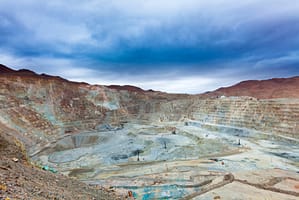
The U.S. House of Representatives on Dec. 18 approved a bill led by U.S Rep. Mark Amodei (R-NV) that would allow mining operators to use federal lands for ancillary activities related to mining, such as waste disposal, regardless of whether the lands contain mineral deposits valuable enough to be mined.
The House voted 219-198 to advance the bipartisan Mining Regulatory Clarity Act of 2025, H.R. 1366, to the U.S. Senate. Rep. Amodei sponsored the measure on Feb. 14 alongside lead original cosponsor U.S. Rep. Steven Horsford (D-NV).
“I’m glad to see the House pass this bill once again with bipartisan support, and I urge the Senate to act swiftly to get it signed into law,” Rep. Amodei said.
H.R. 1366 would address a 2022 decision in the U.S. Court of Appeals for the Ninth Circuit related to the Rosemont Copper Mine in Arizona. The court held that mining claims are only allowed where mineral validity has been established and that mill site claims are more appropriate means for establishing a mining waste disposal site under the Mining Act.
The bill would permit a mining operator to locate and include within its plan of operations as many mill site claims (e.g., areas for waste rock disposal) as are reasonably necessary for its operations, and to use or occupy public land in accordance with an approved plan of operations.
Additionally, H.R. 1366 would require any revenue generated from fees for such mill site claims to be deposited into what would be the newly created Abandoned Hardrock Mine Fund, which the U.S. Department of the Interior would be required to use for certain abandoned hardrock mine reclamation activities, according to the Congressional Record bill summary.
“Strengthening our domestic mineral supply chain isn’t optional; it’s demanded to ensure we don’t fall further behind China,” said Rep. Amodei. “Western states are sitting on a wealth of resources and a critical opportunity to break our dangerous reliance on foreign adversaries while powering our own economy.
“The Mining Regulatory Clarity Act restores decades of established precedent, repairs a permitting process undermined by the Rosemont decision, and gives domestic mining operations the certainty they need to compete aggressively and win,” he added.
The congressman pointed out that if allowed to stand, the Rosemont decision would thwart hardrock mining projects across federal lands, further jeopardizing domestic mineral supply chains, energy security, and national security.
“Streamlining the hardrock mining process will create good jobs and strengthen our energy sector,” said Rep. Horsford. “At the same time, this legislation delivers more resources for the Silver State to clean up past mining-related contaminants in our environment. The result is more jobs, a stronger economy, and an opportunity for a cleaner Nevada moving forward.”
The National Mining Association and the Nevada Mining Association support the bill.