



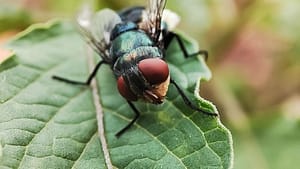
U.S. Rep. Tony Gonzales (R-TX) led a bipartisan contingent of 43 lawmakers in calling for expanded federal efforts to eradicate and contain the New World screwworm (NWS), which threatens the nation’s livestock, farming, and wildlife industries.
The lawmakers pointed out that in November 2024, Congress first received reports of NWS detected in the Mexican state of Chiapas. Since then, the number of reported cases has surged from five to now at least 33 and has spread to the states of Campeche and Tabasco, according to a March 10 letter they sent to U.S. Department of Agriculture (USDA) Secretary Brooke Rollins.
“This raises a critical question of how many cases are truly out there and whether we have mechanisms in place to ensure the safety of U.S. livestock and wildlife,” wrote Rep. Gonzales and his colleagues. “Left unchecked, an outbreak could cost livestock producers millions of dollars per year and inflict detrimental economic losses on the national economy.”
According to the letter, the life cycle of NWS makes it uniquely destructive to livestock and wildlife as NWS larvae infest living tissue, causing severe wounds that can lead to infection and death.
While the United States successfully eradicated NWS in 1966 using the sterile insect technique, which required dropping sterilized flies out of airplanes to disrupt the reproductive cycle, the current and only accessible sterile fly production facility in Panama — which is operated jointly by USDA and the Panamanian government — is maxed out at producing 100 million sterile flies per week.
“However, this output is no longer sufficient to maintain an effective barrier against NWS migration,” the members wrote. “There are currently no sterile fly production facilities in the U.S. or Mexico, and to successfully push the NWS population further back into Central and South America it is estimated an additional 100 million sterile flies per week will be needed.”
Rep. Gonzales and the members, who included U.S. Rep. Gabe Vasquez (D-NM), said that to address the issue, the USDA should work with state, local, and relevant industry stakeholders to proactively address the emerging threat, including by considering whether to establish a sterile fly production facility in Texas or the Southwest.
The Texas Farm Bureau and the Texas & Southwestern Cattle Raisers Association endorsed the letter.