



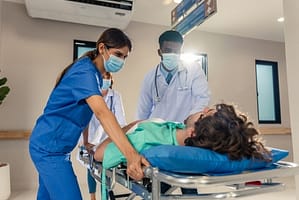
Toward preventing fentanyl overdoses in the United States, a bipartisan, bicameral bill offered on March 10 by U.S. Rep. Bob Latta (R-OH) would direct the U.S. Secretary of Health and Human Services (HHS) to issue guidance on whether hospital emergency departments should implement fentanyl testing as a routine procedure for patients experiencing an overdose.
Tyler’s Law, H.R. 2004, would also require HHS to complete a study on how frequently hospitals test for fentanyl in patients experiencing an overdose and to use the results of the study to issue guidance to hospitals on implementing fentanyl testing in emergency rooms.
“Illicit fentanyl and its analogs have claimed countless American lives, and we must continue to do everything we can to curb this deadly epidemic,” Rep. Latta said. “That’s why I’m proud to introduce Tyler’s Law, which will help us better understand fentanyl overdoses and the fentanyl overdose testing shortfalls occurring in hospital emergency rooms.”
Rep. Latta cosponsored H.R. 2004 alongside bill sponsor U.S. Rep. Ted Lieu (D-CA) and 18 other original cosponsors, including U.S. Reps. Troy Balderson (R-OH), Juan Ciscomani (R-AZ), David Valadao (R-CA), and Don Bacon (R-NE). Companion legislation, the same-named S. 921, was introduced the same day by U.S. Sens. Todd Young (R-IN), Jim Banks (R-IN), and Alex Padilla (D-CA).
“Fentanyl is the leading cause of drug overdoses in the U.S. and hospitals must test for it,” said Rep. Lieu. “Tyler’s Law will help better equip our doctors and hospitals to prevent fentanyl-related deaths. It’s time to come together and save lives.”
Currently, many drug screenings in emergency rooms only test for marijuana, cocaine, amphetamines, opiates, and phencyclidine (PCP) but not fentanyl, a synthetic opioid that does not show up on most rapid drug screenings. Adding fentanyl to routine drug screenings in emergency rooms could prevent many fentanyl-related deaths, according to the lawmakers.
The bill is named in memory of Tyler Shamash, a 19-year-old who died in 2018 following a fentanyl ingestion. He was not tested for fentanyl upon being checked into the emergency room.
“I urge my colleagues in the House and Senate to support this vital, bipartisan legislation which will help save lives,” said Rep. Latta.