



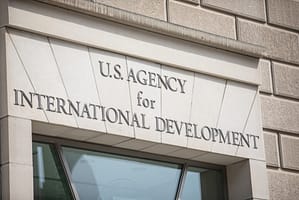
As competitors like China expand their global diplomatic footprints, it’s imperative that Congress get detailed information from the U.S. State Department and the U.S. Agency for International Development (USAID) regarding their annual unfunded priorities to counter that expansion, says U.S. Sen. Todd Young (R-IN).
The Fully Funding Our National Security Priorities Act, S. 4863, which Sen. Young cosponsored with bill sponsor U.S. Sen. Tim Kaine (D-VA), would recognize the roles of both the State Department and USAID as key national security agencies, and would acknowledge that under-investing in diplomatic and development programs undercuts America’s ability to effectively counter its foreign rivals.
“This bill will encourage more collaboration between the State Department and Congress to help ensure taxpayer dollars are being allocated to pressing national security needs, such as countering the Chinese Communist Party,” said Sen. Young, who along with Sen. Kaine serves on the U.S. Senate Foreign Relations Committee, which is considering the bill.
If enacted, S. 4863 specifically would require an annual report on the unfunded programs, activities, and mission requirements within the State Department and USAID.
“Diplomacy is a critical component of America’s national security,” Sen. Young said. “Our legislation will require the State Department to provide additional transparency about its long-term priorities and planning.”
Additionally, S. 4863 also would recognize that the State Department, as a critical national security agency, remains chronically understaffed and underfunded at a time when geopolitical rivals, including the People’s Republic of China, are rapidly expanding their global diplomatic presences, according to the text of the bill.
“China is rapidly expanding its diplomatic footprint around the world. Now is not the time to cut resources at the State Department and USAID,” Sen. Kaine said. “We should be doing the exact opposite.”
S. 4863 has garnered support from the American Academy of Diplomacy and the American Foreign Service Association.
Sen. Young and Sen. Kaine also filed the bill as an amendment to the fiscal year 2025 National Defense Authorization Act, according to congressional staff.