



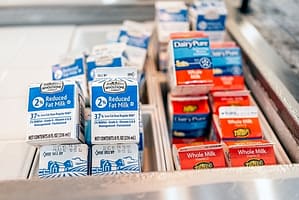
U.S. Sen. Joni Ernst (R-IA) and U.S. Rep. Glenn “GT” Thompson (R-PA) applauded action on Nov. 20 by the U.S. Senate, which unanimously approved their bipartisan, bicameral Whole Milk for Healthy Kids Act of 2025.
“I am udderly thrilled that the Whole Milk for Healthy Kids Act is one step closer to becoming law,” Sen. Ernst posted on Facebook on Nov. 20. “Encouraging students to choose dairy doesn’t just help them achieve a balanced and nutritious meal — it also supports our Iowa dairy farmers.”
Sen. Ernst on Jan. 23 cosponsored the Senate-passed version, S. 222, alongside U.S. Sen. Peter Welch (D-VT). The measure now heads to the U.S. House of Representatives to be reconciled with its version, the same-named H.R. 649, which Rep. Thompson sponsored on the same day with lead original cosponsor U.S. Rep. Kim Schrier (D-WA). The House version currently has 118 cosponsors.
“For far too long, milk has been unfairly vilified, and it has deprived an entire generation of students of the 13 essential nutrients that support healthy development and academic success,” Rep. Thompson said. “I’m encouraged to see the Senate advance my common-sense, bipartisan bill.
“I look forward to passing the Whole Milk for Healthy Kids Act in the House and sending it to the president’s desk to be signed into law,” added the congressman.
The bill would revise requirements for milk provided by the National School Lunch Program of the U.S. Department of Agriculture (USDA).
Currently, schools participating in the program must provide milk that is consistent with the most recent Dietary Guidelines for Americans; USDA regulations require milk to be fat-free or low-fat and allow milk to be flavored or unflavored.
If enacted, the bill would modify these restrictions and permit schools to offer students whole, reduced-fat, low-fat, and fat-free flavored and unflavored milk. The milk that is offered may be organic or nonorganic. USDA could not prohibit a participating school from offering students any of these milk choices, according to the Congressional Record bill summary.
Additionally, schools currently participating in the program would have to provide meals that meet certain nutrition requirements; USDA regulations require that the average saturated fat content of the meals offered must be less than 10 percent of the total calories.
Under the bill, fluid milk would be excluded from the saturated fat content calculation; milk fat included in any fluid milk provided by the program must not be considered saturated fat for the purposes of measuring compliance with USDA regulations, the summary says.
Finally, the bill would prohibit schools participating in the program from purchasing or offering milk produced by Chinese state-owned enterprises.
The Senate passage of the bill received support from the National Milk Producers Federation and the International Dairy Foods Association.