



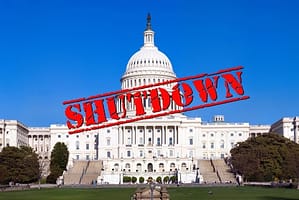
Congress would not be paid unless it passes a budget and all 12 appropriations bills on time under a bipartisan bill introduced on Oct. 14 by U.S. Rep. Bill Huizenga (R-MI).
“We need to get our nation’s budget and appropriations process back on track,” Rep. Huizenga said. “If Congress can’t fulfill its most basic duty to pass a budget, it shouldn’t get paid, and members of Congress shouldn’t get back-pay either.”
The congressman cosponsored the No Budget, No Pay Act, H.R. 5755, with bill sponsor U.S. Rep. Scott Peters (D-CA).
Under the bill, if both houses of Congress have not approved a concurrent resolution on the budget for a fiscal year before Oct. 1 of that fiscal year, and have not passed all the regular appropriations bills for the next fiscal year before Oct. 1 of that fiscal year, then the pay of each member of Congress may not be paid for each day following that Oct. 1 until the date on which both chambers approve a concurrent resolution on the budget for that fiscal year and all the regular appropriations bills.
Additionally, H.R. 5755 would prohibit any retroactive pay from being paid to each member, according to the text of the bill.
“The No Budget, No Pay Act forces the same real-world consequences on all members of Congress that a shutdown or continuing resolution places on our troops and hardworking Americans,” said Rep. Huizenga. “Americans want the government to get back to basics and get our nation’s fiscal house in order. We can jump start this process by holding Congress personally accountable to its budgetary deadlines.”
Rep. Peters agreed, noting that when the government shuts down, countless Americans are forced to endure the consequences. “That’s why, each week for the duration of the shutdown, I am donating my take-home salary to local nonprofits working to support San Diegans who are suffering because of the shutdown,” he added.
H.R. 5755, which is supported by the Economic Program at Third Way and the Concord Coalition, is under consideration by the U.S. House Committee on House Administration.