



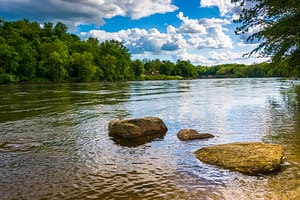
U.S. Rep. Brian Fitzpatrick (R-PA) commended the recent launch of the $4.3 million Delaware Watershed Conservation Fund (DWCF) for the benefits funding will bring to the Delaware River Watershed, which provides drinking water for more than 15 million people.
“This new grant program allows state and local governments, universities, nonprofit organizations, and other partners to come together to protect our drinking water and tackle increasing problems with flooding,” Rep. Fitzpatrick said on Aug. 9. “This program will help restore and protect critical habitat for the wildlife and fisheries that make the river and its tributaries a local and national treasure.”
Creation of the DWCF was announced on Aug. 7 by the U.S. Fish and Wildlife Service (FWS) and the National Fish and Wildlife Foundation (NFWF). In 2018, NFWF, through the DWCF, will award matching grants of $50,000 to $250,000 each to conserve and restore natural areas, corridors, and waterways on public and private lands to support native migratory and resident wildlife and fish and native plants; and to contribute to the social health and economic vitality of the communities in the Delaware River Watershed, according to the FWS.
“The Delaware River Watershed faces extraordinary challenges, resulting from unplanned development, extensive loss of forests, the effects of a changing climate, and deteriorating water quality,” said Rep. Fitzpatrick, who noted he was pleased that lawmakers secured funding for the congressionally established program.
The Delaware River Watershed covers more than 13,500 square miles of land and water, where native brook trout, red knots, river herring, freshwater mussels, oysters and other wildlife live, according to the congressman’s staff.
“Headwaters and streams located in rural, forested and agricultural areas play a major role in the entire ecosystem, as do urban and suburban waterways such as those in Trenton, Philadelphia, and Wilmington,” according to the staff’s Aug. 9 statement.
Annual competitive grants from the DWCF will be awarded to nonprofit organizations; federal, state, interstate and local governments; Indian tribes; and educational institutions to implement restoration and conservation projects, among others, that achieve NFWF framework goals.
The request for grant proposals is currently open and applications are due by Sept. 27.