



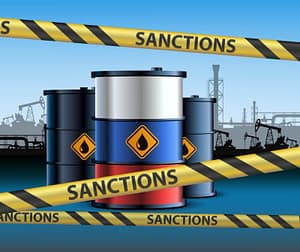
The U.S. Treasury Department on Oct. 22 set sweeping sanctions on Russia’s two largest oil companies, a move that mirrors core provisions in bipartisan legislation led by U.S. Rep. Zach Nunn (R-IA) that he says should be passed to codify and expand those sanctions on Russia’s energy sector.
“The White House’s move to finally impose targeted sanctions and cut off illicit Russian oil sales is the right call, and it’s long overdue,” said Rep. Nunn, vice chairman of the U.S. House Financial Services Subcommittee on National Security.
The Treasury Department’s recent action targets two of the Kremlin’s biggest revenue sources — Rosneft and Lukoil — imposing full sanctions on both companies, as well as dozens of their subsidiaries involved in oil production, refining, and distribution.
The move also puts foreign financial institutions on notice, warning they may face secondary sanctions if they continue facilitating transactions for these companies, a mechanism that directly aligns with the enforcement framework outlined in the Preventing the Escalation of Armed Conflict in Europe (PEACE) Act, H.R. 4346, which Rep. Nunn sponsored on July 10 with lead original cosponsor U.S. Rep. Josh Gottheimer (D-NJ).
If enacted, the bill aims to secure a peaceful resolution to the Russia-Ukraine conflict by requiring the U.S. Treasury Secretary to prohibit, or impose strict conditions on, the opening or maintaining in the United States of a correspondent account or a payable-through account by certain foreign financial institutions, according to the bill’s text.
H.R. 4346 received approval from the U.S. House Financial Services Committee on July 22 with a 53-1 vote and has been on the full chamber’s calendar since Oct. 3.
Specifically, H.R. 4346 would block U.S. bank access for any foreign financial institution that knowingly facilitates transactions for Russian energy firms or sanctioned entities; require Treasury to determine and report whether key Russian oil giants qualify for sanctions under existing law; and trigger penalties for violators under the International Emergency Economic Powers Act.
Additionally, the bill would narrowly allow national security waivers with congressional oversight, and automatically terminate sanctions only if Russia halts its aggression or after five years, according to a bill summary provided by Rep. Nunn’s office.
“Iowans understand that we must back up our calls for peace with real consequences for bad actors like Putin,” Rep. Nunn said. “It’s time to end the government shutdown and immediately pass the PEACE Act to codify these sanctions into law.