



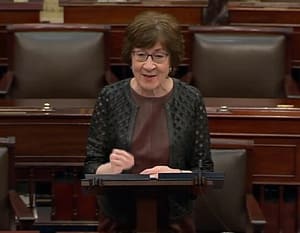
U.S. Sen. Susan Collins (R-ME) on Feb. 25 sponsored a bipartisan bill that would allow disabled claimants to opt in to bypassing a mandatory waiting period to receive their Social Security Disability Insurance (SSDI) benefits, which in turn would be reduced.
“This bipartisan legislation is a straightforward, compassionate, and fiscally responsible step forward,” Sen. Collins said. “It respects the financial integrity of the SSDI program while providing a crucial option to hardworking Americans who simply cannot wait even five months for the benefits they have worked for and desperately need.”
Current law imposes a mandatory five-month waiting period after the Social Security Administration determines that a person is disabled and eligible to receive SSDI benefits. During these five months, no payments are made, even though the disability has already been confirmed.
“This delay prevents individuals from accessing the insurance they’ve earned at a critical and difficult time in their life,” Sen. Collins said Wednesday from the Senate floor. “Lack of benefits can make it more difficult to obtain timely medical treatments, cover basic living expenses, and in some cases where it’s not a terminal condition, begin the process of rehabilitation toward an eventual return to work if possible. The burden of this delay can be heartbreaking.”
Under the We Can’t Wait Act of 2026, S. 3924, which is cosponsored by U.S. Sen. Maggie Hassan (D-NH), disabled claimants could decide to skip the waiting period and start receiving SSDI benefits immediately after approval “in exchange for a modest, actuarially sound reduction in their monthly benefit amount,” according to a bill summary provided by Sen. Collins’ staff.
The bill also would maintain the actuarial balance in the SSDI Trust Fund over the 75-year projection period, and would make no other changes to SSDI, such as altering eligibility criteria, the determination process, or benefit levels for those who choose not to bypass the waiting period, the summary says.
“People diagnosed with a terminal disease or other serious disability should not be forced to wait five months to start receiving the [SSDI] benefits that they earned while working,” said Sen. Hassan. “This bipartisan bill is a common-sense way to give people an option to receive their [SSDI] benefits more quickly, without increasing the cost for the federal government.”
The bill has been endorsed by numerous entities, including the American Association of People with Disabilities, the National Alliance on Mental Illness, Paralyzed Veterans of America, the World Institute on Disability, the National Federation of the Blind, and the American Cancer Society Cancer Action Network, among many others.